

The best AI tools for influencer marketing exist because the math stopped working. There are millions of creators, a handful of usable hours in your week, and no realistic way to vet a shortlist by hand before a campaign has to launch. Software now does the sorting, scoring, and outreach that used to eat entire days, which is why a two-person team can suddenly run a program that used to need six. This guide maps seven tools to the jobs they actually do, then gives you a way to judge which one fits your brand.
TL;DR: The 7 Best AI Tools for Influencer Marketing
Here is the shortlist, so you can act without scrolling. The order matches the detailed profiles further down.
| Tool | Best for | Standout AI feature |
|---|---|---|
| Upfluence | DTC and ecommerce brands running discovery through payouts in one place | Upfluence AI (Jaice), an agent for creator search, outreach, and campaign setup |
| Modash | Teams needing wide cross-platform discovery with payments | AI creator search across Instagram, TikTok, and YouTube |
| Grin | DTC brands treating creators as a long-term revenue channel | AI copilot with revenue attribution |
| CreatorIQ | Large brands and agencies managing complex campaigns | AI similar-creator matching and brand-safety analysis |
| HypeAuditor | Brands that vet audiences before outreach | AI fraud scoring and fake-follower detection |
| Aspire | Brands scaling ambassador and UGC programs | AI creator matching for collaboration workflows |
| Traackr | Enterprise teams running programs across regions | AI-assisted vetting and cross-market benchmarking |
Every tool here earns its place differently. The sections below show where each one fits, and where it doesn’t.
What AI Tools for Influencer Marketing Do
AI tools for influencer marketing automate the manual parts of running a creator program: finding creators, checking that their audiences are real, contacting them, and measuring what the partnership drove. They replace spreadsheets, inbox chasing, and gut-feel selection with data-backed shortlists and workflows.
One point of confusion is worth clearing up early. An AI influencer is a computer-generated virtual persona, a fictional character with a social following. AI tools for marketing content and creator programs are the software that helps you work with real, human creators. This article is about the second kind. If you searched for the first, you’re in a different aisle.
Underneath the marketing language, these platforms automate four jobs: finding creators, launching campaigns, managing creator relationships, and measuring results. The rest of this guide walks each job in turn, then profiles the tools that do them.

Core Tasks AI Tools for Influencer Marketing Handle
A single influencer campaign touches five stages, and most of the manual cost hides between them. Identifying, vetting, and recruiting a handful of creators can take more than 20 hours of someone’s week, spread across five or more disconnected systems for creators, content, payments, and reporting. AI shrinks that work at every stage. Here’s where each social influencer tool actually earns its keep, and where a full influencer marketing toolkit beats a stack of point tools.
Creator Discovery and Matching
Good discovery ranks creators on audience fit, engagement quality, and brand affinity, not raw follower count. A large following can mean a large, indifferent, or partly fake audience. An Upfluence analysis of 10.9 million creator profiles active on Instagram, TikTok, and YouTube in Q2 2026 found that median engagement falls steadily as audience size grows: nano creators (under 10K followers) earn a 2.5% median engagement rate on Instagram, while mega creators (1M+) earn just 0.8%. That is why AI matching looks at who the audience is and how they behave rather than how many there are.
The strongest tools let you describe a brief in plain language and return a ranked shortlist, then surface lookalikes you’d never have found by keyword. That’s the difference between AI creator discovery that saves you a day and a filtered database that just reshuffles the same names.
Influencer Vetting and Fraud Checks
Vetting is where budgets get protected. Fake followers, engagement pods, and bought likes are not edge cases. Across nearly 4 million Instagram creator profiles analyzed by Upfluence, the median profile carries an estimated 7% fake followers, and 1 in 16 profiles shows an estimated fake-follower share above 25%, meaning a quarter or more of the audience a brand would pay to reach may not be real. That is why audience authenticity is a buying factor in its own right, not a nice-to-have.
Brand safety is broader than fake audiences: it also protects the brand’s reputation from association with creators who promote off-brand or risky content such as drugs or alcohol.
An influencer vetting tool scores audience quality, flags suspicious follower growth, and estimates the share of real, active followers. Used well, an influencer marketing research tool turns vetting from a post-hoc regret into a filter you apply before you ever send an email.
Outreach and Recruitment
Activating a single partnership can take eight to ten touchpoints across the first email, follow-ups, and negotiation. Multiply that by a roster and outreach becomes a full-time job. AI drafts personalized first messages, runs follow-up sequences, and keeps every thread in one place.
There’s a second model worth knowing: inbound recruitment, where creators apply to your campaign rather than you hunting them down. A creator marketplace flips the workload, so applications arrive pre-matched instead of you starting cold every time.
Content Approval and Follow-Ups
Content is where the calendar slips. Getting a creator’s post reviewed, sending feedback, and waiting on revisions is a big part of why campaigns take two to six weeks to launch. The constant follow-ups pile on top: chasing content, nudging on timelines, and working through negotiation across a whole roster.
AI helps here by following up at the right time, surfacing the content that is pending your approval, and managing the follow-up load so nothing stalls in an inbox.
Analytics and ROI Measurement
Measurement is the stage that decides whether the program survives the next budget review. When creators, sales, and payouts live in separate systems, tying a post to a dollar is guesswork. AI-backed analytics connect affiliate links, promo codes, and store data so you can see what actually sold.
Strong measurement reports on more than impressions. It tracks sales, average order value, and retention signals, and it puts campaign performance tracking in one dashboard instead of five exports. Reach tells you a post was seen. Revenue tells you it worked.
The bigger shift is what the AI does with those numbers. Upfluence AI (Jaice) reads the analytics of your campaigns and recommends what to do next based on what is working, from the profile of creators to pull in, to the type of campaign to run, to the budget to spend to hit your target. That analytics understanding is what shapes a successful program rather than a one-off win.
See how much of that workflow one platform can run for you. Get Started with Upfluence.

The 7 Best AI Tools for Influencer Marketing
Each profile covers what the tool does, its standout AI feature, and the brand it suits best. The order matches the comparison table above.
Upfluence
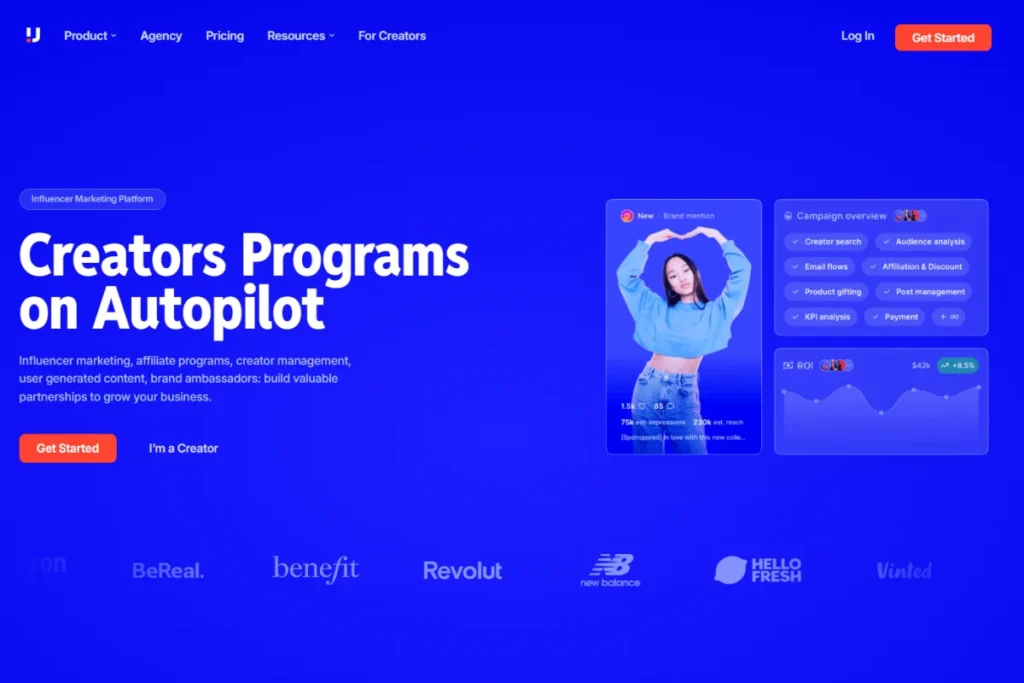
Upfluence is an AI-powered, end-to-end creator marketing platform that runs discovery, outreach, campaign management, and creator payments in one place. Upfluence AI (Jaice) works as an agent rather than a suggestion box: it launches campaigns, finds and vets creators, automates outreach, and reports on performance, with guided campaign setup that recommends creators and budgets based on more than 12 years of creator campaign data.
A second feature sets it apart. Live Capture identifies which of your existing customers and followers are creators, so you can invite those customer-creators into your campaigns. Creators who already love a brand are far more likely to accept a collaboration and cost less to work with. On the commerce side, Upfluence integrates with Shopify, WooCommerce, Amazon, Magento, and BigCommerce, and its payment system handles global payouts with no percentage taken on creator-driven sales.
Best for: DTC and ecommerce brands that want discovery through payouts in one workflow rather than four tools stitched together. Pricing is quote-based by module and scale; you can request a custom quote for your program size.
Modash
Modash is a creator-discovery and influencer-database platform built around wide cross-platform search. It indexes creators across Instagram, TikTok, and YouTube, and pairs discovery with email outreach and campaign tracking.
Its AI-powered creator search and audience filtering are the core draw, alongside affiliate link and promo-code tracking that suits brands running structured, sourcing-first programs. Campaign management leans manual, so it fits teams that want reach and discovery breadth more than hands-off automation. If you’re weighing the two, the Upfluence vs Modash page breaks the differences down.
Best for: teams that prioritize wide creator discovery and want basic payments and tracking in one workflow.
Grin
Grin is a creator-management platform aimed at DTC and ecommerce brands that treat creators as an ongoing revenue channel rather than one-off placements. It centers on relationship management, product gifting, and revenue attribution.
Grin has been pushing into AI, adding an AI copilot and leaning harder into discovery than its earlier, more manual reputation suggested. Its pricing model is worth checking closely, since usage caps and subscription tiers can shape the real cost of running an AI-assisted program at scale. For a side-by-side, see Upfluence vs Grin.
Best for: DTC brands building long-term ambassador and affiliate relationships with a gifting-heavy motion.
CreatorIQ
CreatorIQ is an enterprise influencer-marketing platform built for large brands and agencies running complex, multi-team campaigns. It emphasizes governance, brand safety, and cross-channel reporting.
Its AI surfaces similar-creator recommendations and runs brand-safety analysis on potential partners, which matters when a program spans dozens of stakeholders and compliance is non-negotiable. The trade-offs are a steeper learning curve and quote-based enterprise pricing. The Upfluence vs CreatorIQ comparison covers where each fits.
Best for: large organizations that need governance and reporting depth across big, cross-functional teams.
HypeAuditor
HypeAuditor is best known for audience quality and fraud detection. Where other tools lead with discovery, HypeAuditor leads with vetting: it scores audiences, estimates fake-follower rates, and flags suspicious engagement patterns.
Its AI fraud scoring gives brands a way to check a creator’s audience before spending a cent on the partnership. Discovery and analytics features sit alongside the vetting core, but authenticity checking is the reason most teams reach for it.
Best for: brands that want to lead with rigorous vetting before they commit budget to outreach.
Aspire
Aspire is a creator marketplace and relationship-management platform strong on ambassador programs and user-generated content. It pairs a large inbound marketplace with campaign workflows built around brief templates and product seeding.
Its AI helps match creators to collaboration workflows and keeps ongoing programs organized. Commerce support and integrations are narrower than an end-to-end platform, so it fits teams whose main motion is scaling ambassador and UGC content. See Upfluence vs Aspire for the detail.
Best for: brands scaling ongoing ambassador and UGC programs, especially on a marketplace-inbound model.
Traackr
Traackr is an enterprise platform focused on global program optimization and cross-market benchmarking. It’s built for teams coordinating influencer activity across regions who need to compare performance market to market.
Its AI assists with creator vetting and performance measurement, and its benchmarking is the differentiator for brands that report across countries. Like other enterprise tools, it rewards teams with the scale to use its depth and the patience for a longer onboarding.
Best for: enterprise teams running structured influencer programs across multiple markets.
How to Choose an AI Influencer Marketing Tool
Pick the tool by matching its coverage to your workflow, not by chasing the longest feature list. Four criteria settle most decisions, and the best influencer tools for your brand are the ones that clear all four for how you actually operate.
Workflow coverage. Does it handle only discovery, or discovery through payments? Every stage you leave uncovered becomes another system to buy and reconcile.
Data depth and freshness. Stale creator data costs you real campaign outcomes. Ask how often profiles refresh and whether audience data goes past follower counts into authenticity and engagement quality.
Integrations. A tool that connects to your Shopify or WooCommerce store, your email, and your analytics saves the handoffs that eat your week. One that doesn’t leaves you exporting CSVs.
Pricing model. Watch for how cost scales. Caps on active profiles, seats, and API or token-based usage change the real bill more than the sticker rate, so map pricing to your program size before you commit.
The bigger choice sits underneath those four: point tools or an all-in-one platform. For a small or mid-market team, several specialized tools mean several logins, several contracts, and manual work moving data between them. Instagram influencer marketing tools that only cover one network, for instance, force a second tool the moment you add TikTok. A consolidated platform trades some specialist depth for far fewer handoffs. Which wins depends on your team size and how many stages you run.
Want to see workflow coverage on your own use case? Get Started with Upfluence.
Benefits and Limits of AI for Influencer Marketing
AI’s real benefit is time and better matching. It compresses a 20-plus-hour sourcing week into a fraction of the time, ranks creators on signals a human can’t scan at volume, and keeps outreach and reporting moving without constant babysitting. For lean teams, that’s the difference between running one campaign and running several.
The limits are just as real. AI works from the data it has, so gaps and biases in that data flow into its recommendations. It’s strong at narrowing thousands of options to a defensible shortlist, and weak at the final judgment call: brand fit, creative taste, and whether a partnership feels right. Treat AI as the tool that clears the busywork so your judgment goes where it counts. If you want the mechanics of how that division of labor works in practice, see how Upfluence AI works.
Used this way, ai tools for brand marketing don’t replace the marketer. They hand back the hours the manual version was quietly stealing.
When an All-in-One AI Influencer Marketing Platform Makes Sense
An all-in-one platform makes sense when your program crosses more than two or three of the stages above and the handoffs between tools have started to cost you. The moment you’re exporting creator lists into one system, payment data into another, and results into a third, the consolidation math tips in favor of a single platform.
The gain isn’t just tidiness. It’s data continuity: when discovery, outreach, management, and measurement share one source of truth, attribution stops being guesswork and campaigns launch in a single afternoon instead of stalling between systems. Fewer handoffs also means fewer places for a creator, a payout, or a compliance form to fall through. For DTC and mid-market teams especially, that consolidation is often what makes ecommerce influencer marketing actually scalable rather than a permanent staffing problem.
If your program has outgrown a stack of point tools, that’s the signal to evaluate a platform that runs the whole workflow.

Frequently Asked Questions
Short answers to the questions buyers ask before shortlisting a tool.
Can AI influencer marketing tools work for TikTok and Instagram?
Yes. Most leading tools cover Instagram, TikTok, and YouTube, and many add Twitch, Pinterest, and X. The depth of data varies by network, since each platform exposes different audience and engagement signals, so a tool strong on Instagram may return thinner data on a newer network. Check coverage for the specific platforms your campaigns depend on before you commit.
Can AI tools help with influencer marketing in niche industries?
Yes. Natural-language and lookalike search are what make niche discovery work: instead of guessing keywords, you describe the audience or paste a reference creator, and the AI surfaces others with similar audiences and content. That’s how a sports-nutrition brand or a specialized fitness label finds relevant creators who would never appear under an obvious search term.
Do AI influencer marketing tools support multiple languages and regions?
Many do. Audience-geography and language filters let you target creators by where their followers actually are, which matters for global or multi-market campaigns. Enterprise-oriented tools tend to lean hardest into international coverage and cross-market reporting, so if you run programs across regions, weight that capability heavily.
Can AI influencer marketing tools manage affiliate and gifted campaigns?
Yes. Most tools support affiliate links, promo codes, and product gifting, and some run paid, gifted, and affiliate motions inside one campaign. If payouts and tax compliance matter at scale, look for an influencer payment platform that handles affiliate and gifted campaigns alongside global payments in the same system.
Do AI influencer marketing tools require technical or coding skills?
No. Most platforms are no-code with guided setup, built for marketers rather than engineers. The exception is onboarding time: enterprise tools with deeper governance and reporting take longer to configure, and platforms with an API or MCP offer a technical path for teams that want it, without requiring it of everyone else.
Conclusion
The right AI tool for influencer marketing depends on two things: how much of the workflow you need it to cover, and how big your program is. A vetting specialist, a discovery database, and an enterprise governance suite are all correct answers for different brands. The wrong move is buying the longest feature list instead of the coverage your team will actually use.
If you’re a DTC or ecommerce brand tired of moving data between disconnected tools, the case for one platform that runs discovery through payouts is strong. See what an AI-powered, end-to-end platform looks like in your workflow.