

Executive summary
A Black Friday marketing strategy built on creators is mostly a timing problem. We analyzed 606,000 Black Friday posts by US creators from last season. 58% went live before Black Friday week. Brands that brief creators in late November show up after shoppers have already seen the deals.
This guide covers when to start, what to offer, which platforms and creators to pick, and how to track sales. It draws on that analysis and on our Black Friday data study of 1.2 million creator posts worldwide.
Last Black Friday in numbers
58% of Black Friday creator posts went live before Black Friday week
3x more discount codes and shopping links on Instagram Black Friday posts
606,000 Black Friday posts by US creators analyzed
Source · Upfluence proprietary data. Method: our Black Friday data study
Key takeaways
- 58% of last season’s Black Friday posts by US creators went live before Black Friday week. Creators start talking about deals in October.
- Black Friday 2026 is on November 27. Recruit creators in October and have content live from the week of November 2.
- TikTok carries the early build-up, with 84% to 90% of October’s Black Friday creator posts. Instagram takes over in Black Friday week, with 52% of posts.
- 23% of Instagram Black Friday posts carried a discount code or shopping link, three times the rate of the same creators’ other posts.
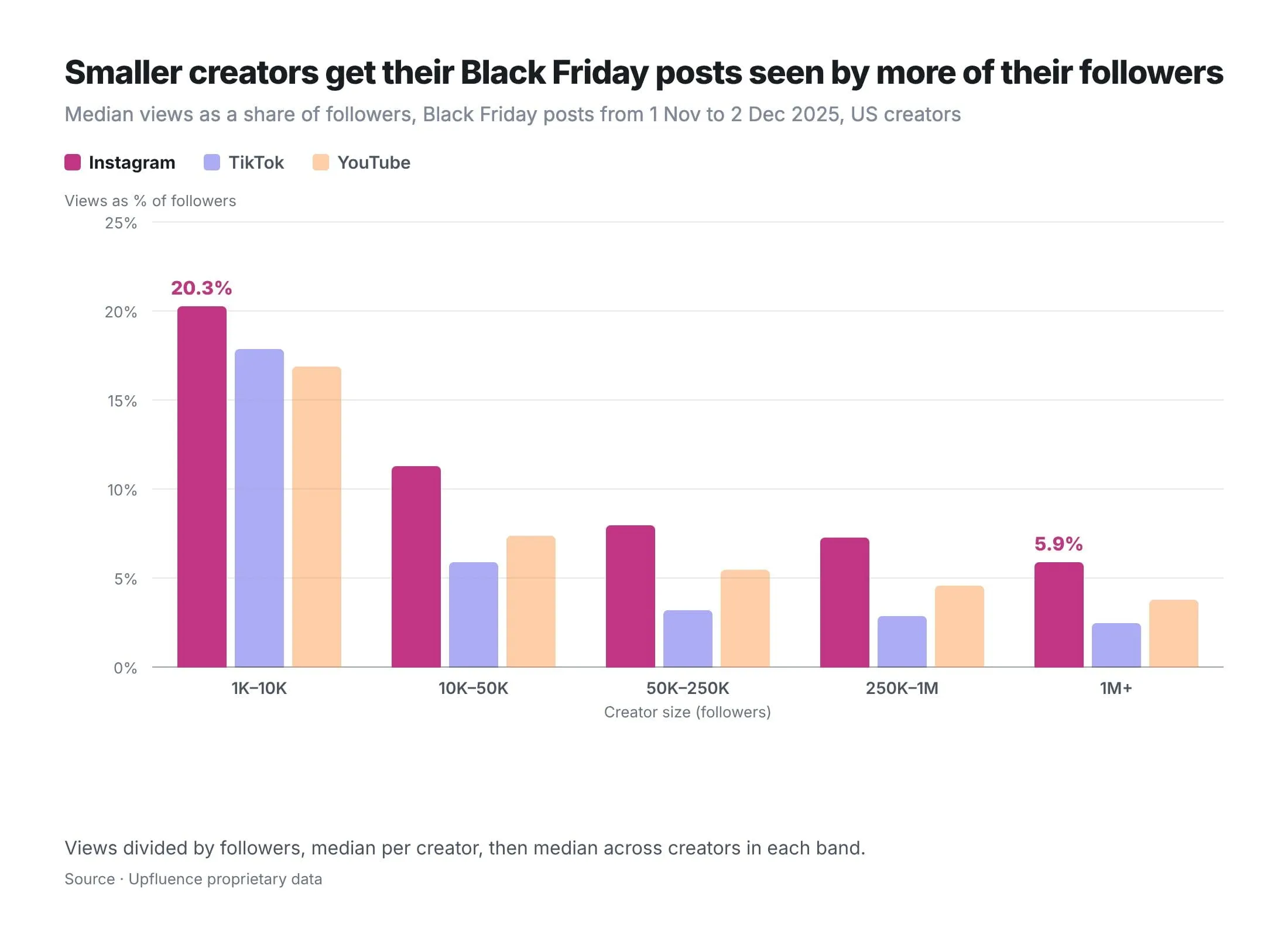
- Smaller creators reach more of their audience. On Instagram, Black Friday posts from accounts with 1K to 10K followers drew views equal to 20% of their followers, against 6% for accounts over 1M.
In this article
- How do you build a Black Friday marketing strategy with creators?
- When should you start your Black Friday influencer campaign?
- What should your creators promote on Black Friday?
- Which platforms and content work best for Black Friday?
- How do you choose creators and measure results?
How do you build a Black Friday marketing strategy with creators?
Build it backwards from November 27. Lock in the offer and the creators in October, get the first posts live in early November, and track sales per creator from the first post. For ecommerce brands, creators are often the channel shoppers trust most in the noisiest week of the year.
For online stores, few days matter more. US shoppers spent a record $11.8 billion online on Black Friday 2025, up from $10.8 billion the year before, according to Adobe Analytics. Shopify merchants sold $14.6 billion over the Black Friday to Cyber Monday weekend. That was 27% more than in 2024, and more than 94,900 of those merchants had their best sales day ever, Shopify reported.
What are the six decisions behind a Black Friday creator campaign?
A Black Friday creator campaign comes down to six decisions:
- Know where your buyers scroll. Check last year’s orders and site traffic by channel. If most sales came from Instagram, that’s where your creators should post.
- Pick one offer creators can explain in a sentence. A personal 20% code is easier to sell than a sitewide sale with six exclusions.
- Start early. Brief creators in October so their content is live from early November, when Black Friday chatter takes off.
- Build your platform mix. TikTok warms people up in October, Instagram closes sales in Black Friday week, and YouTube covers products people research first.
- Pick creators by audience, not fame. Send each one a short brief with the offer, the dates, and two or three must-say points, and leave the script to them.
- Track sales per creator. Check codes and links daily in November and move budget toward the creators who sell.
When should you start your Black Friday influencer campaign?
Book creators in October. Black Friday falls on November 27 this year and Cyber Monday on the 30th, but creators won’t wait for either date.
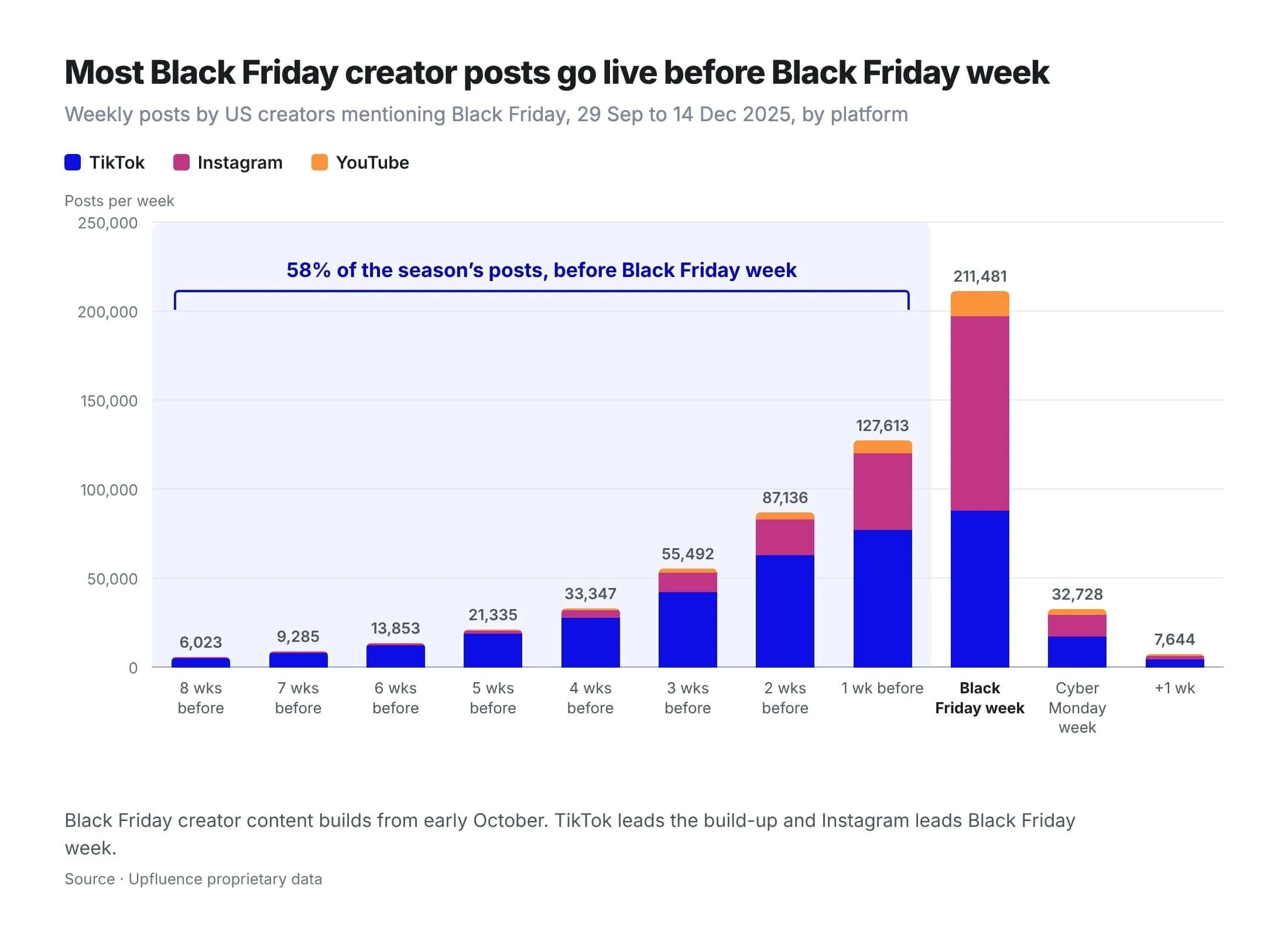
Last season, we found about 606,000 posts by US creators that mentioned Black Friday between late September and mid-December. Most came early. 58% went live before Black Friday week, 35% during it, and only 7% after.
The build-up is steep. From the second week of October to Black Friday week, weekly Black Friday posts grew about 23 times, and the three weeks from November 3 to 23 alone carried 45% of the season.
Platforms don’t move together. TikToks made up 84% to 90% of October’s Black Friday creator posts. Instagram started late, then took 52% of the posts in Black Friday week.
We counted posts by US-based creators on Instagram, TikTok, and YouTube whose caption, or YouTube title and description, mentions Black Friday or BFCM.
Here is how that translates into a calendar for this year:
| When (2026) | What to do |
|---|---|
| By mid-October | Shortlist creators, agree on the offer, and ship products for seeding. |
| October 19 to November 1 | Brief creators, set up codes and links, and start teaser content on TikTok. |
| November 2 to 22 | Early-access codes, reviews, and gift guides go live. Last season, 45% of Black Friday creator posts went out in these three weeks. |
| November 23 to 29 | Black Friday week: Instagram Reels and Stories, countdowns, and a reminder before each deal ends. |
| November 30 to December 2 | Cyber Monday follow-ups and last-chance posts. |
What this means for your team
Black Friday itself is the most crowded day of the season, so a creator post that only goes live that day is easy to miss. Lock in your creators by mid-October and plan at least two waves of November content.
What should your creators promote on Black Friday?
A time-limited offer that only their followers get, in a category your buyers already shop for, with a personal code or link on every post so each sale is tracked.
What sells the most on Black Friday?
In creator content, fashion and beauty lead. In our Black Friday data study, fashion and accessories creators made 24.5% of Instagram’s Black Friday posts, and beauty creators another 17.3%. TikTok leaned further toward beauty (22.4%), followed by family and parenting (19.7%) and fashion (18.1%).
US creators showed the same pattern. About 7% of last November’s posts by beauty-service, cosmetics, women’s fashion, and motherhood creators mentioned Black Friday. Among food and fitness creators, the figure was 1% to 2%.
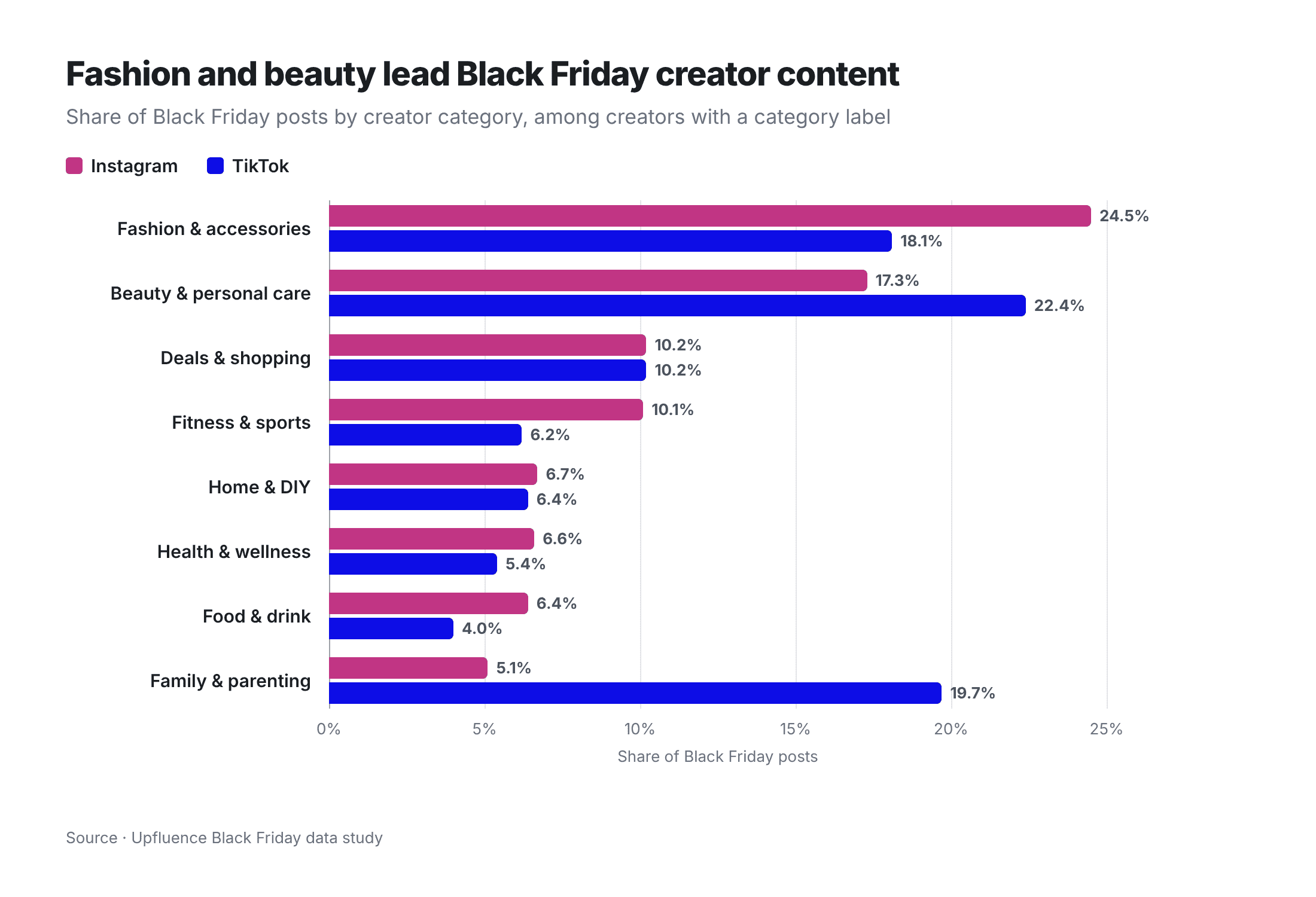
Beauty and fashion brands should expect a crowded feed and book creators early. In quieter categories like food or fitness, a Black Friday offer has far less competition for attention.
Your own sales history matters more than any market-wide list. Before you build your Black Friday marketing strategy, you need a crystal-clear picture of your customers.
Which platforms are they scrolling during peak shopping season? What sparks their interest, stops their scroll, or drives them to add to cart? Your analytics already hold most of the answers.
Last November’s orders tell you which products to put in front of creators, and your traffic sources tell you which platforms to brief them on.
Pull three things from last year’s Black Friday before you brief anyone:
- Your top five products by revenue during Black Friday week.
- The posts, emails, or ads that drove most of those sales.
- The customer segments that bought, and the search terms that brought them to your site.
Which Black Friday offers work best with creators?
Give creators a time-limited offer their followers can’t get anywhere else: a personal discount code, early access, or a bundle you don’t sell through other channels.
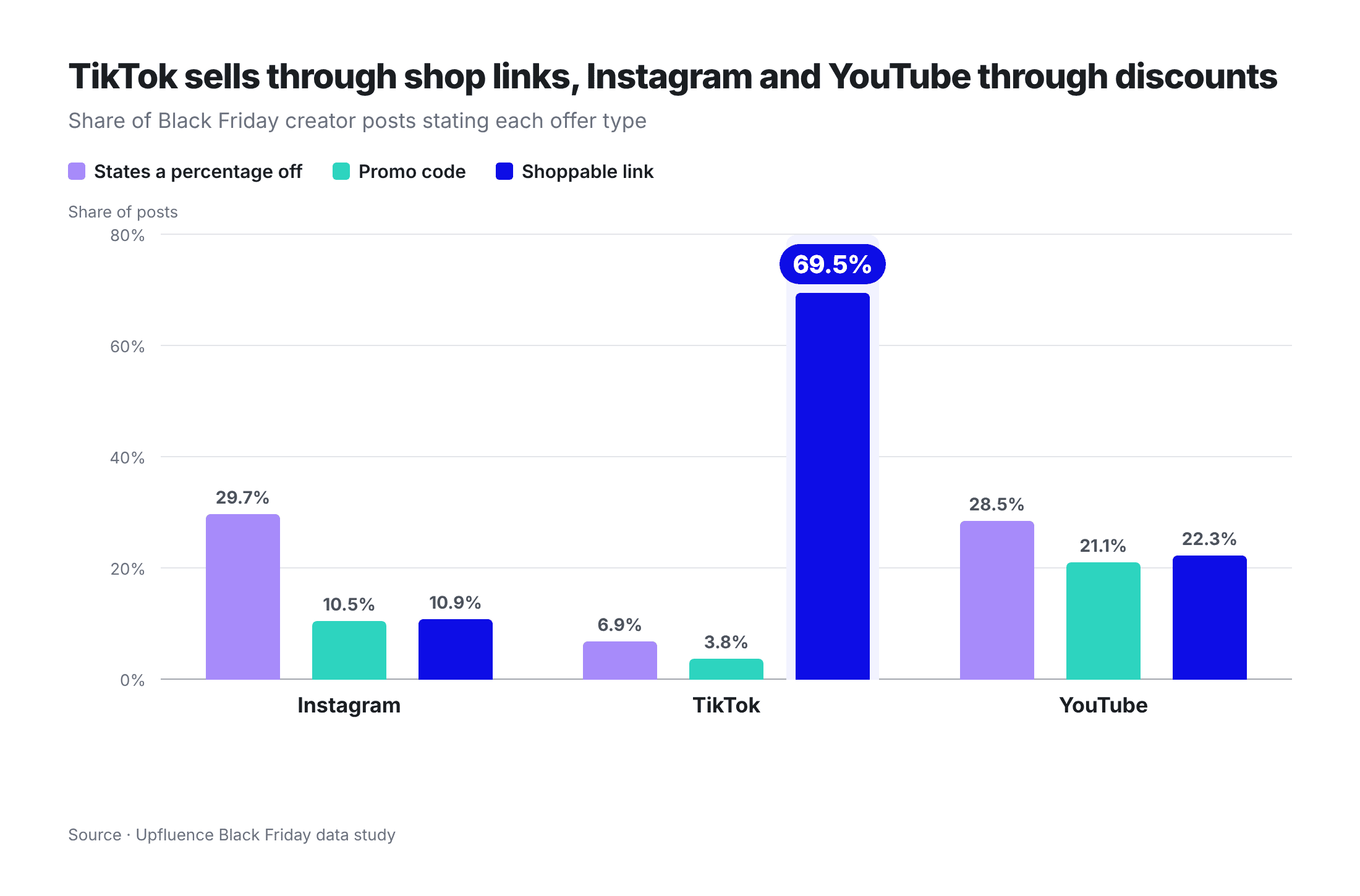
Percentage-off deals are the most common Black Friday offer on Instagram and YouTube. In our data study, 29.7% of Instagram Black Friday posts and 28.5% of YouTube’s stated a percentage off. The discounts were deep, too: 40% of the ones stated on Instagram were 41% off or more.
Three offers that work with creators
- Limited-time discounts. A code that expires at a set hour gives followers a reason to buy now. Size it against the competition: half of the discounts stated in TikTok Black Friday posts were 41% or more, so a 10% code will look small next to them. Put the deadline in the first post, and ask creators for a Story a few hours before it runs out.
- Early access. Open your deals to a creator’s followers 48 to 72 hours before the public sale. US creators published about 4,000 early-access Black Friday posts last November, and on TikTok and YouTube they earned more engagement per view than the average Black Friday post (4.2% against 2.7% on TikTok, 3.5% against 3.2% on YouTube). Early access also fits how creators post, since most of their Black Friday content is live before the sale week begins.
- Exclusive bundles. Bundles were common, with about 13,500 Black Friday posts by US creators mentioning one, but they earned roughly average engagement. A generic bundle doesn’t stand out. One named after the creator, and sold only through their link, gives followers a reason to buy it there.
Give every creator their own code
Whichever offer you pick, give each creator their own code. Posts with a creator code earned more engagement per view than the average Black Friday post on all three platforms last November, most clearly on TikTok (4.7% against 2.7%). A personal code also tells you exactly who sold what.
How do affiliate links and discount codes fit a Black Friday strategy?
They turn creator posts into tracked sales. Give every creator a personal code or affiliate link before the first teaser goes out, and pay commission on the sales it drives.
Creators already work this way during Black Friday. Last November, 23% of Instagram Black Friday posts by US creators carried a discount code or a shopping cue such as “link in bio” or an LTK link. Only 8% of the same creators’ other Instagram posts did.
YouTube showed the same pattern, with 36% of Black Friday videos carrying a code or link against 14% of other videos. TikTok captions rarely include either (3%), most likely because shoppers buy through TikTok Shop product links rather than links in the caption.
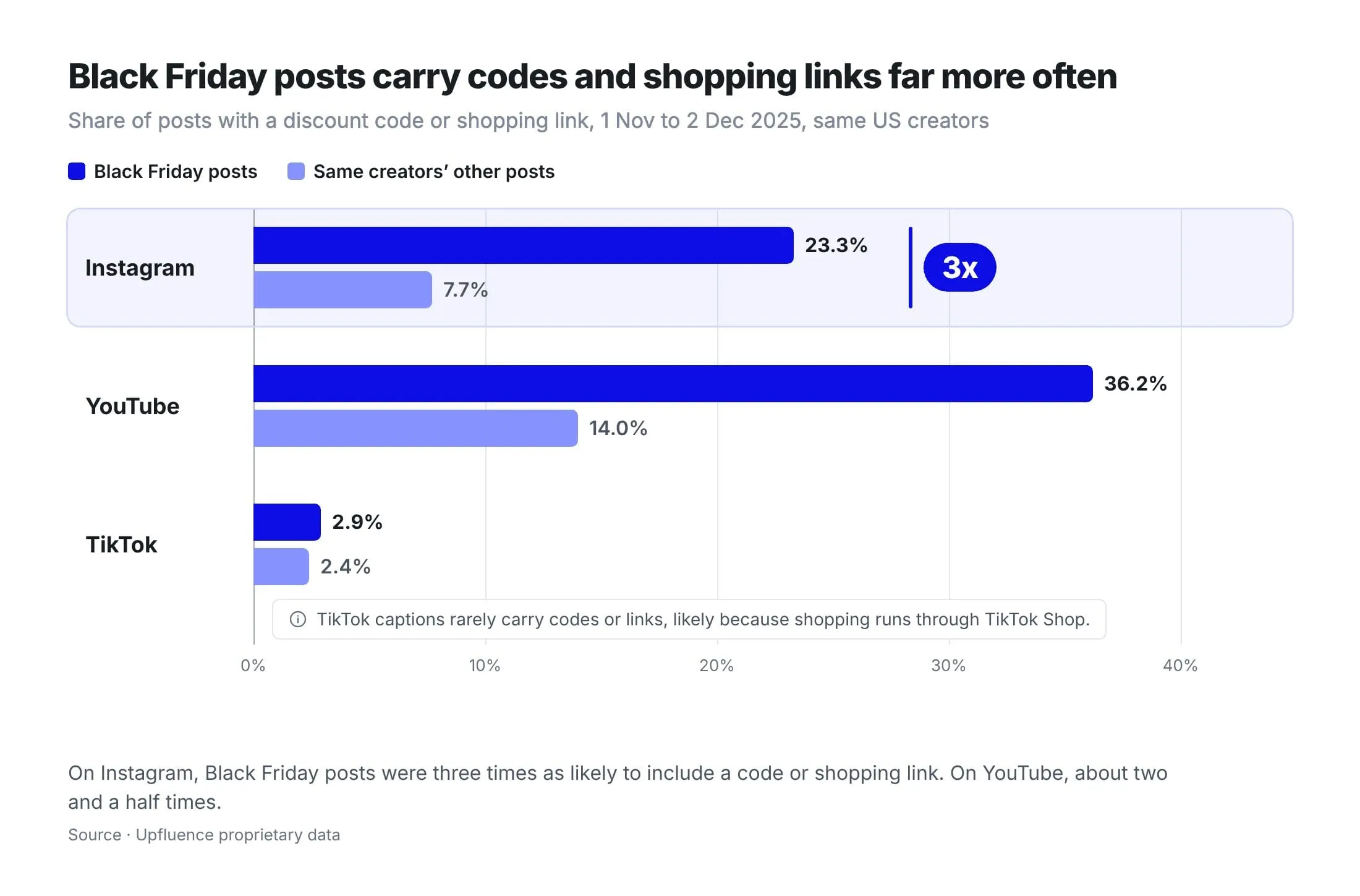
Affiliate commission also suits the Black Friday peak. A creator who earns a share of each sale has a reason to post more than once and to remind followers before the deal ends.
What this means for your team
Set up codes and tracked links before you brief creators, so every post from the first teaser onward can be tied to sales.
Which platforms and content work best for Black Friday?
Pick platforms by timing and price point, then pick formats that show the product before the price. A plain deal post earns less attention than a creator’s usual content.
Which platforms work best for Black Friday influencer marketing?
TikTok for the early build-up, Instagram for Black Friday week, and YouTube for higher-priced products. Across last season, 60% of Black Friday creator posts were TikToks, 34% were on Instagram, and 6% were YouTube videos.
Timing differs by platform too. 70% of TikTok’s Black Friday posts went out before Black Friday week, against 40% of Instagram’s.
Match the platform to your product. Impulse buys suit TikTok and Instagram. A bigger purchase, which shoppers research first, suits YouTube’s longer videos. Whichever you choose, the post has to work on a phone: mobile accounted for 56.4% of US online holiday transactions in 2025, according to Adobe.
- Instagram closes the sale. It carried 52% of US creators’ Black Friday posts in Black Friday week. Stories, countdown stickers, and shopping links keep the path from post to checkout short, and in our data study, 29.7% of Instagram Black Friday posts stated a percentage off.
- TikTok builds demand early. 70% of US creators’ Black Friday TikToks went out before Black Friday week. Most sell through TikTok Shop: 69.5% of TikTok Black Friday posts in our data study carried a shoppable link.
- YouTube suits higher-priced products. Book review and demo videos for early November, then ask the same creators to pin your code in the description once the sale starts. Last season, 36% of US creators’ YouTube Black Friday videos carried a code or link.
What content works best for Black Friday?
Content that shows the product before the price: unboxings, hauls, try-ons, and gift lists. A bare deal announcement gets less attention than a creator’s usual posts.
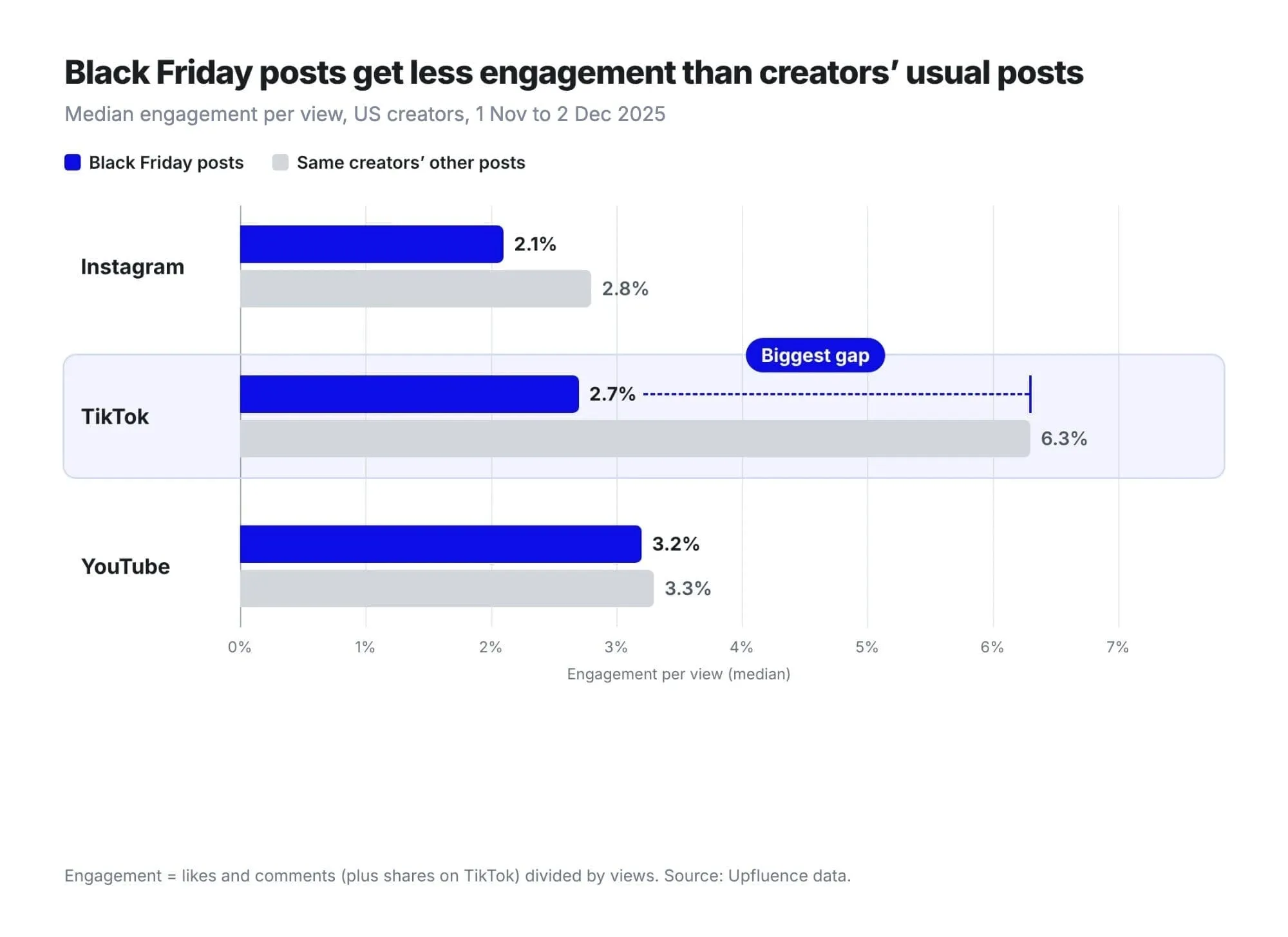
Last November, US creators’ Black Friday posts earned less engagement per view than the same creators’ other posts. On Instagram the median was 2.1% against 2.8%, and on TikTok 2.7% against 6.3%. YouTube held steady at 3.2% against 3.3%. Engagement here means likes and comments (plus shares on TikTok) divided by views, as a median across posts.
The fix is to wrap the offer in a format people would watch anyway. Three formats stood out last season.
Unboxings and first-look reviews
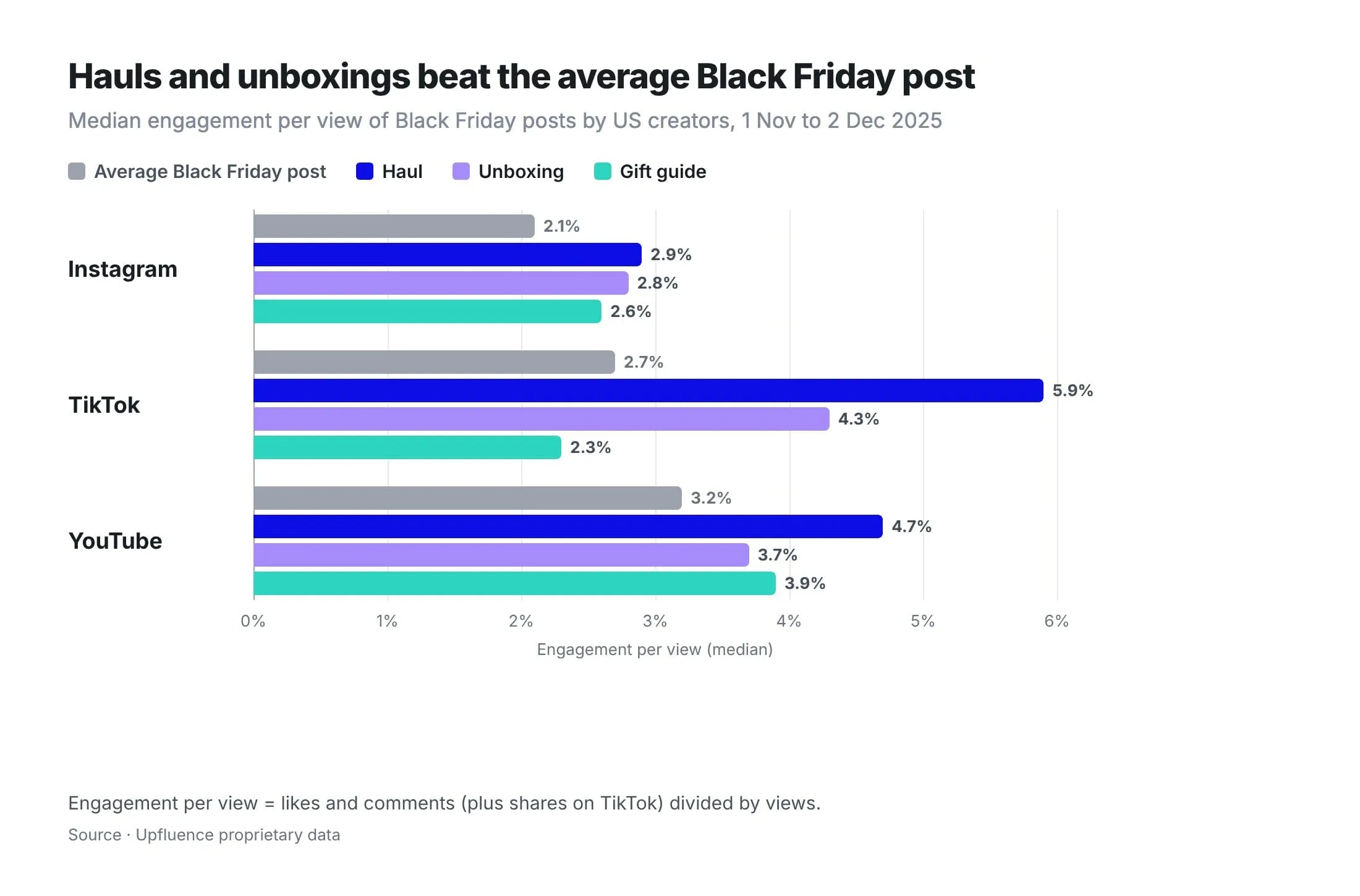
An unboxing lets viewers see the product the way they would at home: the packaging, the first touch, the creator’s honest first reaction. US creators posted about 2,800 Black Friday unboxings last November. They beat the average Black Friday post on all three platforms: 2.8% engagement per view on Instagram against 2.1%, 4.3% on TikTok against 2.7%, and 3.7% on YouTube against 3.2%.
What makes them sell is the commentary. A creator who points out one thing they’d change is more believable than one who loves everything.
Premium items and gifts gain the most from this. Ask creators to close with a quick verdict, such as whether they’d buy it again and who it suits, so a hesitant viewer has a reason to use the code.
Hauls and try-ons
Hauls did best on TikTok and YouTube. On TikTok, Black Friday hauls by US creators earned 5.9% engagement per view, more than twice the 2.7% average. On YouTube they earned 4.7% against 3.2%, and on Instagram 2.9% against 2.1%.
Fashion shoppers want to see how a piece fits before they buy, and a try-on shows exactly that. Most creators film several looks in one go. Their comments on fit and comfort do the selling, because they sound like a friend’s opinion. On Instagram, try-ons earned 3.0% engagement per view last November, ahead of hauls and unboxings.
Gift lists
Gift guides were common, with about 7,000 Black Friday posts by US creators. They beat the average on Instagram (2.6%) and YouTube (3.9%), but not on TikTok, where they earned 2.3%.
A “Top 5 under $50” or “My holiday must-haves” post saves a busy shopper a lot of browsing, and your product shows up as one of five picks rather than as an ad. If your price sits just under a gift threshold, ask for a spot on the list instead of a solo post.
For brand inspiration and campaign breakdowns using these formats, don’t miss our article: Black Friday Campaigns: 10 Creator Campaign Ideas to Copy. For more formats to brief, see our Black Friday marketing ideas.
How do you choose creators and measure results?
There are two jobs here: shortlist creators whose posts actually reach their followers, then track each one’s sales closely enough to move budget mid-campaign.
How do you choose influencers for Black Friday?
Pick creators whose audience matches your buyer, then look at how much of that audience actually sees their posts. On that measure, smaller creators win during Black Friday.
On Instagram, Black Friday posts from creators with 1K to 10K followers drew views equal to a median 20% of their follower count. For accounts over 1M followers, it was 6%. TikTok showed the same slope (18% against 2.5%), and so did YouTube (17% against 4%).
Engagement per view moved less. On Instagram it ran from 2.8% for the smallest accounts to 2.1% for the largest, and on TikTok and YouTube it showed no clear pattern by size. We took each creator’s median across their Black Friday posts last November, then the median across creators in each size band.
What to check before you book a creator
When selecting influencers for your Black Friday campaigns, audience alignment should be your top priority. Go beyond basic demographics and dig into the psychographics of their followers. A luxury skincare brand gets little from a creator whose followers are mostly college students on a budget, whatever that creator’s engagement rate looks like.
Then read the comments. Real questions about sizing, shades, or shipping mean an audience that buys, while a wall of emoji replies doesn’t. Creators who post honest reviews, including the occasional bad one, tend to have followers who act on their picks in November.
Our influencer discovery turns that research into a shortlist in hours rather than weeks.
The search covers more than 14 million creators. Start with location and audience demographics, then narrow by engagement rate, content style, and brand affinity.
Brands can also connect their store to find loyal customers who are already creators.
What this means for your team
Don’t buy on follower count. Ask each creator what share of their followers usually sees a post (views divided by followers), spread the first wave across several smaller accounts, then move budget to whoever drives sales.
How do you measure Black Friday campaign performance?
Track sales per creator first, then reach and engagement. Unique codes and tracked links show which creators drove purchases.
Which numbers should you watch?
When Black Friday hits, there’s no room for guesswork. To scale your results, you need real-time insight into what’s working and what’s not. Watch four numbers:
- Reach and impressions. Reach is the number of people who saw a post, and impressions the number of times it was seen. Both tell you whether the content got out, and nothing about whether it sold.
- Engagement rate. Divide likes and comments (plus shares, where the platform counts them) by views. Don’t expect Black Friday posts to beat a creator’s usual rate: last season’s medians were 2.1% on Instagram, 2.7% on TikTok, and 3.2% on YouTube, all at or below the same creators’ other posts.
- Conversion rate and sales. Track what matters: purchases. Use UTM links and unique promo codes to connect clicks to conversions. Then compare average order value (AOV) and revenue per click: a creator with fewer sales but bigger baskets can be the better buy.
- ROAS (return on ad spend). Take the revenue a campaign brought in and divide it by what it cost, including creator fees and product seeding. A ROAS of 4 means $4 back for every $1 spent.
How to track Black Friday sales in Upfluence
In Upfluence, you can track the sales of your Black Friday influencer campaigns as they come in. We generate promo codes in bulk, one per creator, so every order is tied to the person who drove it.
The results sit in one sales dashboard you can export and share with your team.
One last step before launch: go through our Black Friday checklist so nothing slips in the final week.
Frequently asked questions
When is Black Friday 2026?
Black Friday 2026 is on Friday, November 27, and Cyber Monday is on Monday, November 30. For creator campaigns, the earlier deadline matters more: in our analysis, 58% of US creators’ Black Friday posts last year went live before Black Friday week, so brands should have creator content running from the week of November 2.
Is Black Friday still worth it for brands?
Black Friday is still worth it for brands that work with creators. In our analysis, about 1 in 20 posts by US creators mentioned Black Friday during last year’s Black Friday week, and those mentions rose every week through November. Competition is the main risk, so book creators early and give them an exclusive offer.
What should a Black Friday influencer marketing plan include?
A Black Friday influencer marketing plan needs five dates and one offer. Book creators by mid-October and brief them by November 1. Early-access and review content runs from November 2 to 22, reminders go out in Black Friday week, and Cyber Monday posts close the campaign. Give each creator a personal code or link so every sale can be tracked.
Should creator campaigns run through Cyber Monday?
Creator campaigns should run through Cyber Monday, but only as a short follow-up. In our analysis, Cyber Monday week carried about 5% of last year’s Black Friday creator posts, so it works best for last-chance reminders from creators who already posted, not for launching new partnerships.
How can Upfluence help with your Black Friday marketing strategy?
Upfluence runs the whole Black Friday creator workflow in one place: finding creators, outreach, codes and affiliate links, and sales tracking.
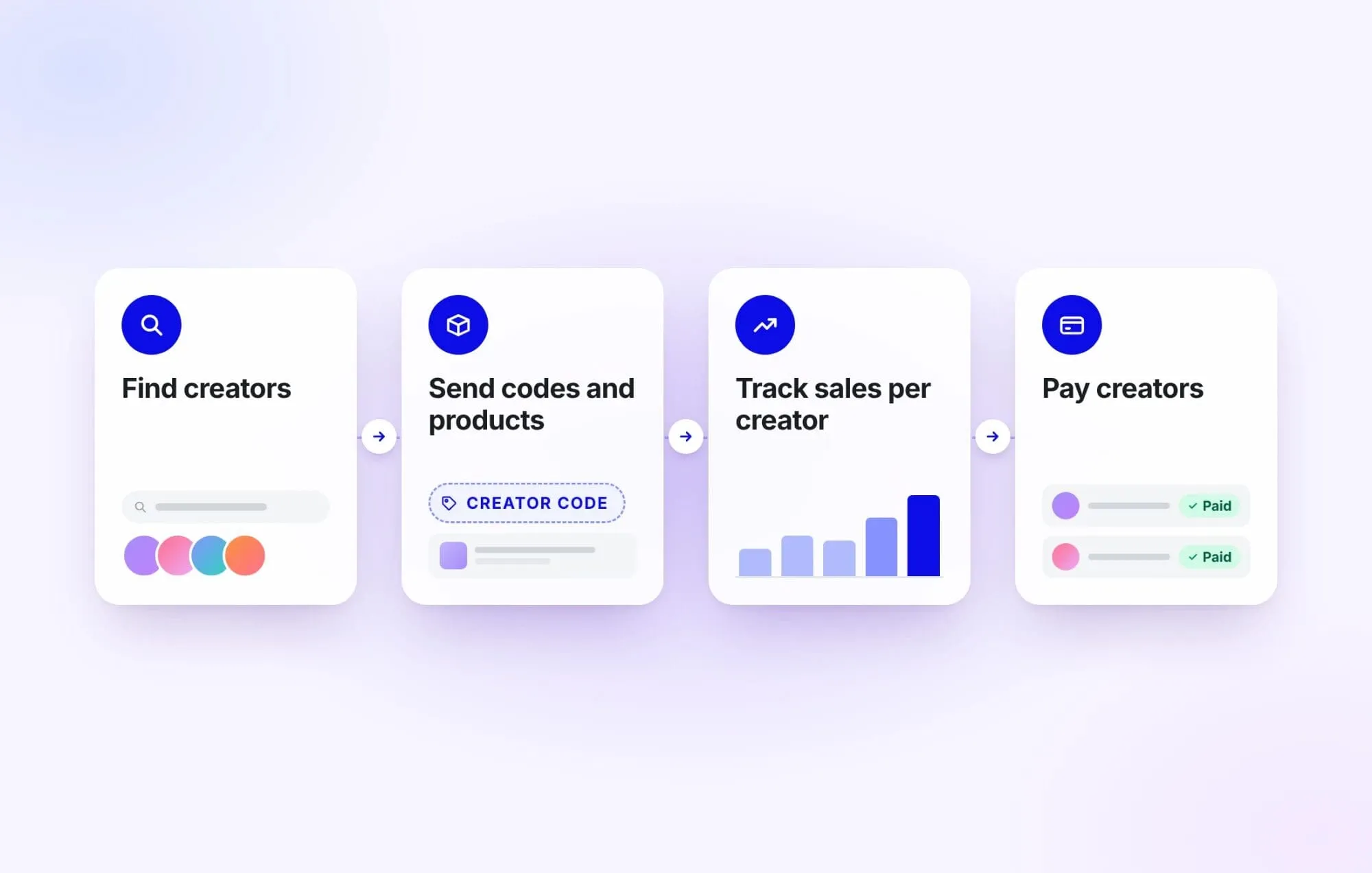
- Creator matching: find influencers that align with your target audience using Jaice, our AI agent, and matching against your customer list. Short on time? Use Upfluence’s creator marketplace to find creators and launch your campaign in minutes.
- Outreach: contact creators from your own Gmail or Outlook, with templates, automatic follow-ups, and an AI mailing assistant.
- Sales and content tracking: give every creator a trackable code or affiliate link, then see sales, CTR, AOV, and ROAS per creator as they come in.
- Drive UGC: collect the posts creators and customers make about you, see which ones perform, and license the best for your own ads.
If you want help planning the creator side before November 27, book a demo with our team.